007 Breasts

007b.com
(zero zero seven b.com)

 agent
Female Intelligence Agency examines:

Does breast size affect
breastfeeding?

book Get the book!
Female Breasts: The Taboo - The Purpose is a book filled with breast-related information, the galleries, and much more. See samples and read more!

Small breasts can breastfeed just as well as big ones

It is the amount of fatty tissue that makes some breasts bigger than others.  In other words, the milk producing apparatus is about the same in both small and big breasts.  Therefore breast size is not linked to the ability to produce breast milk and breastfeed per se.  Even flat-chested women, who don't have practically any fat cells in their breasts, can breastfeed.  Besides, you really don't know your final breast size until after your first pregnancy, because the milk-producing cells and milk ducts grow and branch out a lot during the third trimester.

However, breast size does affect the breastfeeding relationship in at least two different ways.  First of all, many times the babies of large breasted women have some difficulty in latching on in the beginning because they have such a tiny mouth in comparison to the areola they are supposed to take into their mouth and suck on.  This problem usually goes away as the baby grows older.  A lactation consultant can help with the initial problems; for example, the mother can pump the milk during the early weeks while the baby is learning a proper latch, and the pumped milk can be fed to the baby in a bottle.

Secondarily, the research of Peter Hartmann has shown that the milk storage capacity varies a lot between women.  Breast milk is produced continually and it accumulates in the milk ducts between feedings.  During feeding, a baby typically empties about 70-80% of the milk in the breast.  Hartmann found in his studies that some women had 3 times as big a storage capacity than others - but that all of them produced the same amount of milk over a 24-hour period.  In general, bigger breasts of course would have a bigger storage but it was noted that breast size was not always a good predictor of production or storage capacity.

In practical terms it means that women with small storage capacity breasts need to nurse more often, and the babies take in less per feeding.  Women whose breasts have a larger storage capacity can 'deliver' more milk in one feeding, and so the baby needs to nurse fewer times per day.  This further confirms the need of cue feeding or demand feeding where the baby sets the frequency of breastfeeding - and not the clock or the pediatrician or the grandmother.


Breast size in pregnancy, breastfeeding, and weaning

During pregnancy, breasts of course grow a lot in size. This is due to the milk-making system growth and development. Fat actually goes away from breasts at this time.

The 'peak' size is probably when the mature milk comes in about 3-5 days after delivery, because often there is some engorgement with that.

Then during breastfeeding, breasts will constantly change size a little bit, as the baby empties the breast, and they keep constantly making more milk w

At weaning, when the milk is no longer needed, the milk glands gradually atrophy or shrivel up. The breast will shrink in size.

Then, over a period of few months (or up to 6 months), fat is deposited back to the breast, and often the breast becomes about the same size as before pregnancy.

However, this doesn't happen to all women. In some women (it's a minority), their breasts do permamently stay looking like they do when the milk glands shrivel up at weaning - kind of emptyish bags.

With partial weaning, the breast size will go down some as well, since less milk is needed.


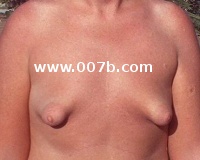
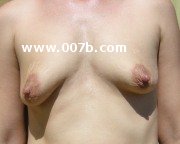
Tubular hypoplastic breast

There is one exception to the rule about breast size/shape and breastfeeding ability, and that is that few women have insufficient glandular tissue in their breasts. In other words they simply don't have enough milk producing cells, and these women can then experience milk supply problems. This condition is called breast hypoplasia or hypoplastic breasts.

This kind of breast is underdeveloped (hypoplastic) in terms of the milk glands. They lack normal fullness and may look like 'empty sacks', and may seem bulbous or swollen at the tip.  Many times hypoplastic breasts are widely spaced from each other, and narrow at the chest wall. Due to lack of glandular tissue, they have an elongated or tubular form, and often are quite small. The areola can be enlarged. There may be a significant asymmetry.  The breasts don't grow during pregnancy and there is no engorgement when the milk is supposed to come in after giving birth.

Scientists don't yet know for sure the reason(s) for this underdevelopment. One theory is that at least in some women it would be linked to too little progesterone, since progesterone mediates the growth of alveoli (milk making glands).

In a 2006 study in Mexico, teenage girls who lived in the agricultural valley with heavy pesticide use had poor mammary gland developmend, and 18.5% of them had NO milk glands.

Other issues include PCOS and other insulin metabolism issues, hypothyroidism, and testosterone overload. Fixing the metabolic issues may help, as might pushing lots of stimulation to increase prolactin levels after birth.

There is also one interesting case reproted in the medical literature where a woman with such underdeveloped breasts was able to successfully nurse her second child, after being given natural progesterone during her second pregnancy. Progesterone stimulates the growth of the glandular tissue in breasts during pregnancy.

If you happen to have these tubular hypoplastic (under-developed) breasts, talk to a lactation consultant before giving birth. Even better, talk to a doctor before pregnancy about a possible natural progesterone treatment. There are measures you can take to try increase your milk supply and your chances of breastfeeding, such as

  • have an unmedicated birth if possible, and put the baby to the breast right after birth
  • nurse often and on cue
  • start to pump about three days after birth
  • try the herbs fenugreek and blessed thistle or the drug domperidone
  • breast compression technique to stimulate more letdowns
  • Correct underlying metabolic or hormonal issues (PCOS, hypothyroidism). One lady has posted her success story below; she was able to see breast changes during her 2nd pregnancy and subsequently breastfeed, after taking Metformin to correct her PCOS.

Discuss these and other options with the lactation consultant.  You may need to supplement with formula,so it is important to observe the baby's output of wet and dirty diapers and weight gain to make sure the baby is getting enough nutrition. Remember also to be happy for whatever breast milk you produce and not blame yourself - even a little is better than none!  And if you don't get any milk at all (which does happen), remember it's not your fault.  For this kind of situation we are thankful that the baby formula exists.

Plastic surgeons try to take the most out of women with hypoplastic breasts. Since it is a true medical condition, they try to push these women to get implants to correct the deformity. Having hypoplastic breasts is not any dangerous condition. They look different, and as explained above, women with hypoplastic/tubular breasts often have difficulties in producing enough milk.

It is understandable to feel bad when you have deformed breasts, and there's nothing wrong if you wish to have it corrected. Unfortunately the implants will only lessen the milk supply and the probability of successful breastfeeding, besides forcing the woman to go through several surgeries throughout her lifetime, and putting her to a high risk of serious complications and diseases.


Sources and resources

Breastfeeding and underdeveloped (Hypoplastic) breasts from BabyCenter.com

Insufficient glandular tissue at Mothering.com Discussion Forums

MOBI - Mothers Overcoming Breastfeeding Issues
MOBI, a community of mothers and breastfeeding specialists, tries to provide women with compassion and understanding, whether their issues involve concrete breastfeeding questions, or emotional issues, such as helplessness, anger, and grief. The medical or emotional issues discussed at MOBI are not intended as a substitute for consultation from your health-care provider.

Insufficient Glandular Tissue - a good lesson.

Lactation failure due to insufficient glandular development of the breast Pediatrics. 1985 Nov;76(5):823-8.

Patient with insufficient glandular tissue experiences milk supply increase attributed to progesterone treatment for luteal phase defect. J Hum Lact. 1999 Dec;15(4):339-43.
In this one case, the woman was able to produce enough milk for her second child when she was treated with natural progesterone during that particular pregnancy. Progesterone stimulates the growth of the glandular tissue in breast (alveoli) during pregnancy.

A link between polycystic ovarian syndrome (PCOS) and insufficient milk supply - from Breastfeeding.com's nwesletter.

PCOS and Breastfeeding - an interview with Lesa Childers, talking about PCOS, low milk supply, and hypoplastic breasts.

Altered breast development in young girls from an agricultural environment. Environ Health Perspect. 2006 Mar;114(3):471-5.
"We examined the onset of breast development in a group of peripubertal girls from the Yaqui Valley of Sonora, Mexico. We observed that girls from valley towns, areas using modern agricultural practices, exhibited larger breast fields than those of girls living in the foothills... Further, girls from valley towns displayed a poorly defined relationship between breast size and mammary gland development, whereas girls from the Yaqui foothills, where traditional ranching occurs, show a robust positive relationship between breast size and mammary size. ... Mammary tissue, determined by palpation, was absent in 18.5% of the girls living in agricultural areas, although palpable breast adipose tissue was present."


All these breasts have succesfully nursed a baby/babies:

lactating


breastfeeding woman's breasts


breasts with stretch marks
See more


These are tubular breasts on an obese woman. They used to be A-cup before she gained a lot of weight.
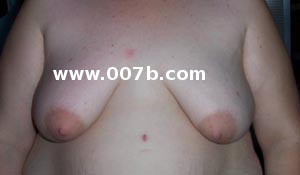
tubular breasts
"My breasts never changed during pregnancy or engorged after and with the help of a lactation consultant and a hospital grade pump we learned that I made no milk."


These small breasts appear hypoplastic, not having enough milk glands (glandular tissue), so there MAY be problems with milk supply.
tubular breasts
But you can't judge by appearance alone! The proof is in the pudding: the true test of having insufficient GLANDULAR tissue (not enough milk-making tissue) is to check if the breasts make enough milk after giving birth.


"I think breastfeeding is wonderful!"


What do you think?
We may not be able to answer all emails, nor post all comments on the website, but all comments get read!
Name:
E-mail: (required)
Comments:

Can I make my breasts bigger? Find the answer


By sending your comments, you agree that 007 Breasts becomes the possessor of anything you write and submit. 007 Breasts may therefore publish and edit your comment, or choose not to publish it, unless you tell us differently.

Other people's comments


The following comments are from various visitors to www.007b.com, and may or may not agree with the viewpoints presented on this website. The comments are posted here because they might further help and encourage men and women who visit this website; however 007 Breasts is not responsible for this content or any loss/damage caused by reading these.

I'm 24 years old and have always hated my breasts. My friends would call my breasts "pointy". I thought well once I have a child, they would get bigger, but after I had my child, my breats stayed the same. I always just thought they were normal, but I recently been diagnosed with hypoplastic tubular breasts. I found out from a lactation nurse whose was trying to help me breast feed my son. I struggled for a couple a days on breast feeding until the nurse told me that I have tubular breasts. It was so hard for me to hear that, since I was so adamant to breastfeed. I pumped for about a month and could only produce about 1/8 a cup a day if not less. I want people to know who are like me, that it's ok. Formula fed babies are just as happy and healthy. Hopefully others can read this and know they aren't the only one out there to have this problem. My husband loves my breasts and I have also learned to "love" them too.

Jennifer


I have PCOS and IGT [impaired glucose tolerance]. During my first pregnancy I had NO breast changes. I was not educated about breastfeeding, I thought it just magically happened! Was I sad, upset, disappointed and felt guilty to find out I had IGT and no breastmilk, not even a drop. Fast forward 4 years and I am pregnant again. I am on Metformin to help correct my PCOS. Imagine my surprise when mid-pregnancy I start to see breast changes! After I delivered my 2nd daughter, I was able to breastfeed her. I had to suppliment with formula, but by the time she started solids I was able to reduce the formula until she was on just breastmilk and solids (around 6-7 months). We never looked back. I did take Domperidone for 2 months starting a month after delivery. I stopped the domperidone and all the nursing kept my supply at the increased level. And guess what? We breast fed for 3 YEARS! I am one of the fortunate ones who seemed to grow breast tissue with 2nd (and subsiquent) pregnancies. I think we are "done" but I'd love one more to see if I could exlusively breast feed! This was one of the sites that I came to to learn about IGT, so I wanted to post my success story. Thank you!!

Andrea


I never developed breasts. I grew up in a river valley of an agricultural area. It makes me wonder? I look like a man and can never find a dress that is high cut to stuff my bra. I do not like to go swimming or our for special occasions.

T. T.


I am 19 and I have a 10month old baby girl. I gave birth to her at a birth centre and had very set ideas that I would breast feed however when she came along I simply didn't have the supply. I could never work out why. Not being able to produce milk for my baby was absolutely devastating.

Having stumbled across this site I now know that I am not the only woman with what I used to call "deformed" breasts. Ever since I hit puberty I have been disgusted with my breasts to the point that I HATE being naked in light where I can see myself let alone anyone else seeing me.

Just last week I started to look into breast augmentation to fix my problem. I really thought I was the only person whose breasts looked like this.

Having seen the photos of other REAL women with the same problem as me has made me feel so much better. I no longer feel like a freak and I now understand that my not being able to breastfeed was not something I did wrong but a deformity I was born with and something I could not help.

I have always said I got in the wrong queue when I was being made and God gave me small breasts that didn't match the rest of me but now I know that I'm not alone.


Thank you so much for your site! For the past decade and throughout three children, very desperately wanting to provide life giving milk to them as infants, I had failed!!! Or had I? After my last baby was over a year old, I found your site and realized for the first time exactly what the issue was and is, and the weight of guilt left me for good! I do have severe issues with my ovaries.. so the discussion on that was very enlighltening. The pictures were easy to identify: as soon as I saw them, I knew. This is me. And that other folks deal with the same thing as I have. Thanks again for helping me to identify the root cause of my lack of milk production ( and funny looking breasts!) releasing years of guilt!

jennifer


It is such a relief to put a name to my lactation problem. Uptil now it was very fustrating to know I could not provide my children the most natural and nutricious food possible. My first child nursed all the time and did not gain any weight in the second two weeks of her life - when I told this to the nurse she went flying down the hall to the Pediatrician and came back with an armload of formula and told me to supplement NOW! For all four of my children I breastfed what I could and supplemented the rest. Even using raglin (Rx for reflux that can increase milk production) I only increased my milk to about an ounce per pumping - that's to an ounce not an extra ounce. So to see these pictures and see myself it is a relief to know there might be help next time (if there is a next time) for me to increase my breast milk production with natural progesterone if my doctor agrees.
Thank you so much for this article/website. It is of great help and comfort to those of us who have this condition.

Cyndi J.


Can a person that had a complete hysterectomy with removal of their ovaries still produce breast milk?

Yes. The control of breast milk production does not depend on ovarian hormones, but on pituitarian hormones (prolactin and oxytocin). See Induced Lactation on AskLenore.info and Induced Lactation at Surrogacy.com.


I found your site very reassuring - I stumbled across it looking for sites on breastfeeding in public. I have always been a little insecure about my breasts not being very big - now I realize they are just fine the way they are, even at the age of 49 and after breastfeeding 2 babies.

I live in the UK and when my babies were born, it was expected that you would at least try to breastfeed and the midwives gave you a lot of support. Having said that, I still had to "top up" my babies - for all you women out there who think this is a terrible thing and I should have just "kept at it until the milk started producing", I think you need to be more compassionate towards women who find breastfeeding difficult.

I could probably have breastfed if I had been able to spend the first 40 days of the baby's life in bed, with all my meals brought to me and someone else to take care of the house, the husband and the other children, but that is not the reality for most women in today's society, and my body simply could not make enough milk to support my babies, both of whom were very big and very hungry.

I wasn't one of those women whose milk spurts across the room as soon as she hears a baby cry, much as I would have liked to be. I think women who lactate easily (and it has nothing to do with breast size) really don't appreciate that there are some women who just don't.

And in the end, as my babies began to lose weight rather than gain it, I "topped up" and I don't feel guilty about it. I think they got all the antibodies, and the bonding, but I wasn't going to starve them to satisfy my own determination to "do it right". My mother couldn't breastfeed either, so perhaps it was something genetic.

On the issue of breasts being sexualised - I'd say the nudity thing is right - I was raised as a child as a nudist and we had nudist friends - I saw a lot of people naked when I was a child and don't think anything of it - in the south of France, women go topless on the beach and men and women change their clothes on the beach - after awhile, it becomes totally normal and you hardly notice.

Here in the UK, I know women who have breastfed their children until they go to school - women breastfeed in playgroups, in church, on parkbenches, in restaurants and in public places all the time - I once stood next to a woman in the checkout line at the supermarket who had a new baby only a few days old - it was very busy, 6pm in the evening and the baby was obviously very hungry and she couldn't stand it anymore - she sat down on the chairs opposite the checkout, whipped out her breast and gave her baby what it needed. Her mother took care of her shopping - no-one batted an eyelid.

I can't remember ever feeling overly self-conscious about breast-feeding. I just did it whenever I needed to.

My favourite breast-feeding picture is of the woman who was a director of a large NGO who had to visit a famine area in the Sudan right after she herself had had a baby and was breastfeeding.

She said she was nervous about what she would feel, knowing she had milk to give and she could only visit the area for a few hours - and when she got there, she just felt she had to do what she could.

She asked them to find her someone who really needed help and they brought her a woman who had twins that she could not feed. So she sat down outside on an oil drum and fed both of them. Someone snapped a picture of her which appeared in the papers here. She was kind of embarassed but said she was glad she was able to help in the only way she could. To me, that picture is worth a thousand words.

Cara


Because of your site I now know that i have hypoplastic tubular breasts, which also explains why I had a horribly difficult time breastfeeding my 4 sons and had to supplement with formula following each pregnancy.

Here's my advice to anyone intending to breastfeed. Don't let doctors, nurses, so-called lactation specialists and 'breastfeeding support groups' make you feel guilty or inadequate about any decision you make. Do what you can if you choose to, but most importantly love and enjoy your baby.

I gave birth to four healthy extremely intelligent sons (two are twins!) who aren't allergic to anything even though they got formula early on. They are now adults.

Remember: your love, your sanity, your attentiveness and your presence are far more important to your baby than what comes out of your breasts.

Thank you for your balanced and informative approach to this topic. Lara


I have classic tubular breasts. I have four children and had almost no milk (they need to teach nurses that someone with tubular breasts my not have milk; they all think every woman does). I have a hard time finding a bra to fit me. I'm obese. My band size would be around 48" but my cup size only an A or AA. Can you help? The only bras I found that might work are mastectomy bras - which is a little embarrassing for me. I'm very lucky though my husband loves me just the way I am!!!

Cathy


This is a wonderful site filled with excellent information! I wish I had found this info back when I was having my children. I had always planned, no, took for granted that I would breast-feed my children. But, to my horror, I would not produce milk. My breast size changed very little, hardly a noticable amount and after my baby was born my milk never "came in". I had no breast engorgement what so ever. I was told it was because of having a c-section and that I simply needed to spend more time nursing and pumping. I gave up quickly. When I had my daughter, I was better prepared and started pumping right away. It also helped that she did not go into neo-natal because of breathing problems like my son and so latched on beautifully. However, once again, my breasts never engorged and no amount of breast feeding would satisfy her. I had no choice but to supplement with a bottle ON TOP of non-stop nursing. My daughter became one with me. She was constantly attached to my breasts - all day and all night. When she was sleeping I'd pump, but could never get more then an ounce between both breasts. Finally, when the fall semester began at my college and I was gone for 3 full days a week, my daughter refused my breast all together. The only reason I was able to go as long as I did with breast feeding was thanks to my regime of fenugreek and blessed thistle capsule I started after 3 weeks of unsuccessful nursing. After the first night I took those supplements, my breast were rocks filled with milk the next morning - but it was still not enough to forego the formula. I still fed her about 16 oz of formula a day. I would try to cut it out to increase my milk supply with terrible results. She would cry inconsolably till she had her bottle.

After much research, I determined that I have a physical problem with my breasts. The lactation nurse suggested that I might simply have a tissue deficiency if my breast size never changed during pregnancy, but she never gave more info such what this disorder was called or what I could do to know for sure. I also decided that I might lack certain hormones for proper let-down, which prevented my breasts from properly emptying so as to produce more milk. But all in all, Le Leche League members, lactation consultants at the hospitals, pediatricians, my OBGYN and my friends who were successful at breast feeding were of little or no help to me, save for encouragement to keep trying. They all told me the same old thing, each as if I had never heard it before. I wasn't nursing enough and I wasn't pumping enough. After my experience, I understand why so many give up easily. Because those who are successfull do NOT have boobs that can't make milk! Hence, they are no help to people like me who were not guilty of laziness or selfishness or a lack of education. I would like to send every perfessional that deals with pregnancy and ALL my friends a link to this web site. Thank you for finally providing an explanation to my problems and some ideas of how to cope if I decide to have another child.

Molly


I am 35 and just wanted to add that there are plenty of men, myself included, who find "tubular hypoplastic" breasts every bit as attractive as non-tubular(?) ones. I never new there was a medical term, I just thought that breasts, like every other human part, come in different shapes. Anyway, if that's you, it may be an issue come nursing time but don't worry about it 'til then...be happy being different!

Greg


HI, I'm 14 years old, and I have NO BREASTS. I got my period about 4-5 months ago (today we are the 26th of april). My whole family makes fun of me, because I have no breasts, my friends, guys, EVERYONE. I look on a bunch of sites to find out what i can do to at least fit in a A cup. But everywhere i go it tells me different things. I don't know what to do. I've though of buying gel cups to put on my bra, but that would be embarrasing, and i don't even know if i'm old enough to buy some. And i don't know if it would show. I am so comfused, plz help me.

I hope you have read our page Being Flat-chested. As far as gel inserts go, you can buy them if you feel comfortable with them, and they definitely will show. They are put to bra cups. But if you are not comfortable with them, then don't worry about them. Your attitude towards your own body is important, and other people will be able to notice/sense it.

The mocking etc. is caused by the American over-emphasis on breast size. Please read Breast Taboo to learn more... you are being harmed by it, and many other girls and women are and have been. It is very unfortunate! But, on an individual level, I hope you can ignore their comments as much as you can - it's not helping to listen to them.


My son is 5 months old and he has been feeding great. however now my breast are two different sizes and the one that he eats from is the biggest, What can I do?

Rachel

You can try encourage him to feed more from the smaller breast. Or, just not worry about it. Check one pic of a mom like you. Also read Lopsided! What can I do? - information from kellymom.com.


Thank you for your site. I am a 28 year old woman who is a 34 A. As a young girl I had one breast grow while the other stayed flat. It was devastating.... i was a tomboy and enjoyed being bra less. I was relieved and reassured by a male doctor. A few months ago the sweat glands on my nipples enlarged and I felt self conscious. Again another trip to the doctor and this time normal as usual. I had a friend get implants and saw the pain she went through and began a new found appreciation for my breasts. I realized that I had to grow into them. Our bodies are such tender topics and it is a relief to see that your site encourages diversity. Thank you.

Zoey


my mother says if you breast feed your breast will dry up and disappear when u finish nursing. i also heard that the longer you nurse the larger your breast or your breast stay large. which is true. my aunt lost her breast after she breast fed her children. my mother didnt breast feed me and she still has hers. im confused please help.
ruthie

Your breasts will stay large as long as your nurse, which for the child's sake it is good to nurse for several years. See Nursing a baby and toddler.

After weaning, women experience 'breast involution' where the milk making cells shrivel up to nothing, and breast size goes down. After that, most women's breasts fill fit fat once again, so usually women get their old breast size back in about 6 months after weaning. See also Weaning: what mom can expect from her body.


I have read your articles on hypoplastic breasts because I was diagnosed with this problem after my first pregnancy. I did everything natural, and was looking forward to naturally nursing my son, however the lactation consultant I saw mentioned that I have hypoplastic breasts. After seeing many of these particular breasts on different websites, I came to the conclusion that this was not what was wrong. I am a c-cup and have round, not long shaped breasts. I decided to have a hormone test. They found I was very low in progesterone. I immediately got on this natural form of progesterone and felt my breast tissue begin to grow. I became pregnant in august of 2004 and plan to deliver naturally again. Only this time I will be looking forward to successfully nursing my child. My breasts have changed during this pregnancy, (they didn't during my last one. I have a little "colostrum crusties" on my nipples and I am loving it! It sounds weird but I can't wait to be engorged. Please be praying for me as I deliver in 5 months and would definately look forward to doing everything (including nursing) naturally. The way our breasts are supposed to be... :) If this helps anyone, I sure hope so.
Sincerely,
Amanda


THANKS, I FEEL BETTER KNOWING IAM NOT THE ONLY ONE WITH ONE BREAST BIGGER THAN THE OTHER.

JOSIE


this website is so good it really helpd me overcome the fact that i have got tubular boobs and i thought i was the only one on this earth now i know that im not alone in this game called life.

melamy


hi, i have just been looking on your website as my brests are really starting to bother me. i am 17 and have discovered that i have tubular hypoplastic breasts. however, they have been explained as underdeveloped breasts and seeing as i am only 17 i was wondering if they will continue to grow anymore seeing as my periods are still not properly established. it's a really embarassing problem as i am worried my new boyfriend will think i'm deformed if i even let him see them! is there any way in which i could boost their growth because i am only a 36AA. also no bras ever fit properly. its bringing my confidence down too. i'd really like some answers. thanks.
alice soper

If your periods are not yet established properly, (whatever you mean by that), then I assume the period started within the less maybe 18 months and that means your breasts would probably still grow and develop. So you cannot yet really tell if you have 'tubular hypoplastic breasts'.

Now, if there is a problem with your period, like if it is very irregular for way more than one year since you started, then you might benefit from seeing a doctor, since there might be a problem with the ovaries. Ovaries produce female hormones. Breast growth is dependent on many hormones and so a problem with hormones can affect breast development. One common condition associated with irregular menses is Polycystic Ovary Syndrome.

Now, if your breasts truly are and would remain underdeveloped, the only possibility that I know of as of now that might help is that there is a one case report of a woman who couldn't produce milk because of that for her first child. Then she took natural progesterone during her other pregnancy and that child she was able to breastfeed normally (see the link above).


I nurse my twins and still have milk to store. In the hospital I did simultanous pumping after each feeding but soon stopped when it increased my milk production too much. So I learned even one breast can deliver more than a baby needs. My breasts are normal size but I want to encourage mothers who think they cannot nurse. Most of lactation problems start in the head and let us resign before trying.

Monika from Germany


I'm a teen mom (15) and I'm breastfeeding my little boy. Always had very little breasts but now I'm proud when I feel the milk coming out!
They may be small but they work, YESS!
Never will be sad having small boobies again!

Nancy


I am a new mother and didn't know anything about breast feeding or milk and this site taught me everything. I've started feeding my boy and he loves it. My breasts are now very saggy but I don't care.

annonymous


I think this website is wonderful. I'm young, and although I haven't known about it for very long, I think I have tubular breasts. Until now everything I've found on this 'condition' has been constant 'breast augmentation' and 'deformity' and whatnot, with little to no explanation about the breast feeding complications or that there were any at all, which confused me greatly, quite frankly. This site has been very informative and extraordinarily reassuring, and I have to say, I was very suprised to find it. It is communication like this, one way or another, that discourages absurdities like pointless breast implants to 'fix' a shape which is in its natural beauty as is; which I have to say I am thankful for, because for a while I was driving myself mad wondering what was wrong with me and if it could be fixed. Thank you for making the information available, and through this, support.

M. Murphy


I have very long 10 inch hypoplastic tubular breasts and I always thought I was the only one with unperfect breasts. This site helped my self-esteem. Thanks to the creator of this site.

Ruthy Grey


I found your article about breastfeeding differences for large - or small- breasted women interesting. I prefer to think of "sagging" breasts as "flexible". One of my friends with large breasts found that she could easily nurse a baby on her lap and tuck her other breast round her side for her toddler, while with my smaller ones I had to go to a lot more trouble to tandem feed. I used to feed my first two to sleep lying on my side, with my 2 1/2 year-old attached to bottom breast, and baby lying propped on top of him, feeding off the top one. On the other hand, feeding walking about with your baby in a sling seems to be easier for women with smaller breasts, as you can tightly strap baby up to the right level and then feed hands-free. With baby 3 I found that was more difficult and I needed to use an arm for support as my breast hung lower. On the other hand, it is definitely easier to get him into a good position when he is on my lap or when I am lying on my side.

Angela


At age 47 after years of feeling awful about my body image and struggling to breast feed my 3 boys (I had to bring them to the pediatrician weekly for weighing, they nursed for 45 minutes on each side and 30 minutes later wanted to nurse again etc.) I found out that I have tubular breast. I found this out from a plastic surgeon. None of my obstetricians or gynecologists or family practice drs. ever mentioned this even through my struggles. I decided to have breast augmentation and a mastoplexy. I have very broad shoulders so finding clothing other than t-shirts and turtlenecks was impossible. Now I fit into my clothes. I also have a much better body image. For the last 16 years I have been an aerobics instructor and have always been fit but never felt like I looked fit. Now I am proportioned. While I don't think breast implants are for everyone they have made a big difference in my life. I wish I had known about my "deformity" at a younger age. I always felt like a failure because I couldn't breast feed easily. I hope more drs. will become educated on this condition and educate their patients particularly those that are trying to breast feed. My research shows that about 2 to 5 % of women have tubular breasts. By the way, my first child I breast fed for 3 months and then supplemented. My 2nd child I breast fed until he was 10 months. My 3rd child I breast fed for 3 months. That was over 18 years ago with much less info and support than what is available today.

a.farmer


Female Breasts: The Taboo - The Purpose cover

THE BOOK!

It's here! Finally! A new book titled Female Breasts: The Taboo - The Purpose. It presents practically all of the information on this website, the galleries, and the best testimonials - in an upgraded form as compared to the website. Click here to see samples and read more!


Female breast as a taboo
007b.com HOME
Breast taboo explained
Taboo causes early weaning
Breast obsession
Nipple stimulation & arousal
Oxytocin & is breastfeeding sexual?
Movies with breastfeeding scenes


Nutrition
DHA in breast milk good for baby's brain
Vitamin D and breast milk
Essential fatty acids explained
Anorexia and breasts


Freebies
Free Breastfeeding pictures
Free Breastfeeding pictures 2
Free articles


Breastfeeding
Wonderful breast milk
Breastfeeding a baby/toddler
Breast size & breastfeeding
Breastfeeding and intelligence
Breastfeeding terms & definitions
Breast vs bottle debate
Animal nursing pictures
Breastfeeding help and resources


Baring breasts in public
Breastfeeding in public
Nursing in public world-wide
Nursing in public - Europe
What to think about topfreedom?
Topless beaches at Margarita island
Topfreedom & naturism links


Body image & breasts
Normal Breasts Gallery 1 2 3
Normal Breasts Gallery A B C
Normal Nipples pictures
Breast development & teenagers worries
Who needs breast implants?
Small breasts
Teenage girls, breast size & body image
Sagging - causes and definition
Being flat-chested 1 2


Breast health
Basic breast anatomy
Why wear bras | Bra fitting | Sports bra?
Fibrocystic breast disease & breast pain
Large breasts
Breast cancer and bras
Preventing breast cancer
Prevent breast cancer part 2
Breast health links


Breast Questions | Link to us | Baby & parenting links | Body Image & Misc. links | Advertise | Breastfeeding help | Privacy policy | Contact


Google

Web 007 Breasts

Copyright 2003-2008 -- 007 Breasts. All Rights Reserved.
If you wish to use this content in any manner, you need to Contact us for details.
www.007b.com